Hurricane-Season HVAC Prep for North Houston Homeowners
Maintenance & Storm Prep · Updated June 22, 2026 · AC Repair Expo Heating & Cooling Inc · Licensed TACLB43277C
If a tropical storm or hurricane is headed for the Houston area, the single most important thing you can do for your AC is simple: shut it off at the thermostat and the breaker before the power goes out, and don't turn it back on until you've checked it. Running a system through a power flicker, a brownout, or a flooded condenser is how a survivable storm turns into a compressor replacement. Below is exactly what to do before, during, and after the storm.
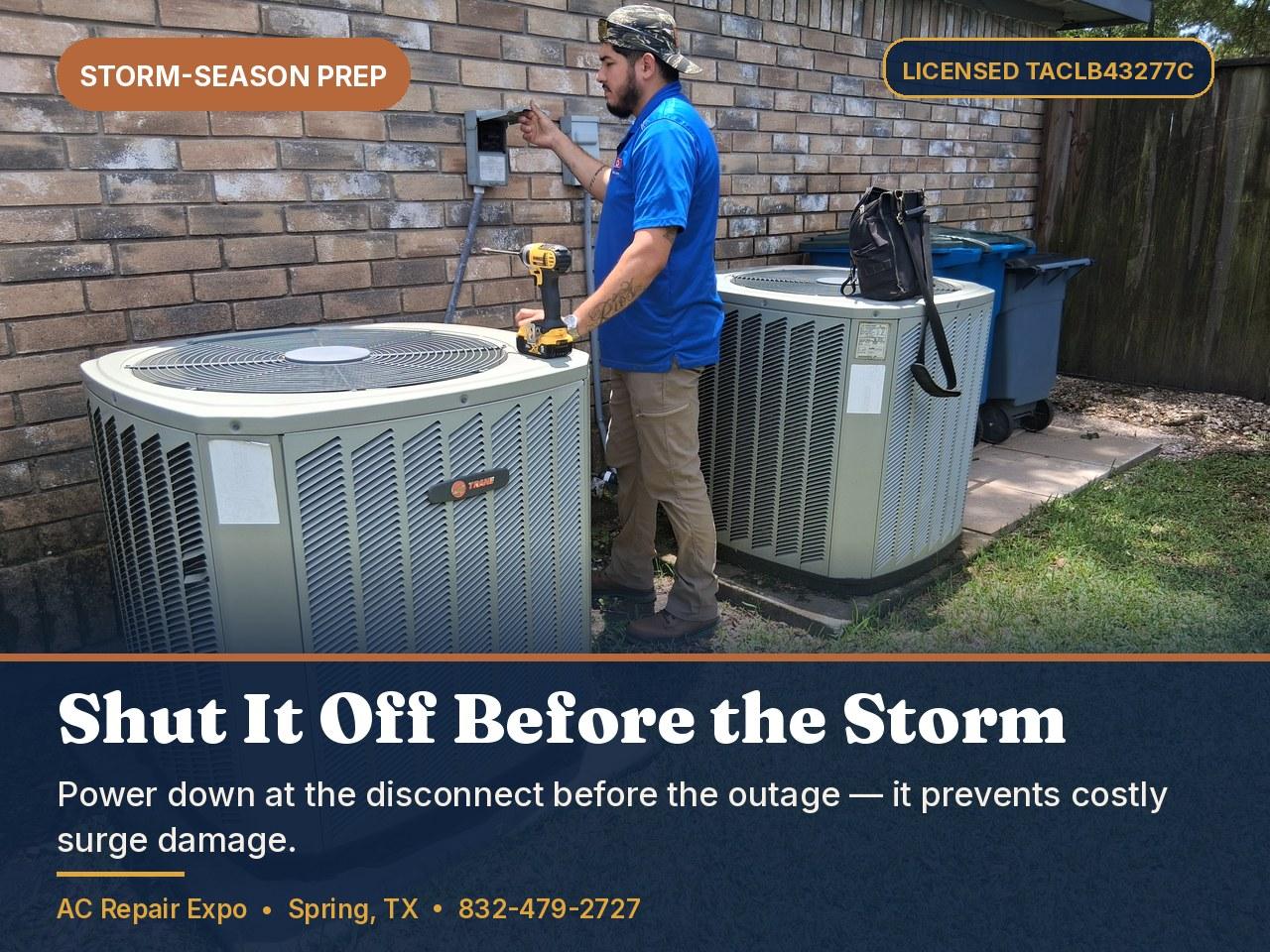
Your outdoor condenser is the part most exposed to storm damage — flooding, debris, and power surges all hit it first.
Why hurricane season is hard on your AC
North Houston sits squarely in the path of Gulf storms, and Atlantic hurricane season runs June through November — right through our hottest months. Three things put your system at risk during a storm:
Power surges and brownouts. When the grid flickers or comes back after an outage, the voltage spike can fry your capacitor, contactor, or control board — and in a bad surge, the compressor itself.
Flooding. Your outdoor condenser sits at ground level. If floodwater rises into it, mud and debris get pulled into the electrical components and the fan motor.
Wind-driven debris. Branches, fence pieces, and yard debris get blown into the condenser fins and fan grille, bending fins and jamming the fan.
Before the storm: a 6-point prep checklist
Pre-cool your home. Run the AC a little cooler than usual in the hours before landfall so the house stays comfortable longer once the power goes out.
Turn the system OFF at the thermostat, then the breaker. Do this before the storm hits, not after the power is already cutting in and out. This is the step that prevents surge damage.
Clear the area around the condenser. Bring in or secure anything nearby that could become a projectile — patio furniture, planters, loose tools, trash cans.
Don't cover or wrap the unit while it's running. A breathable cover is fine once the system is shut off, but never run a covered condenser.
Photograph your equipment. Take a few clear photos of your indoor and outdoor units, including the model and serial plate. If you need to file a storm-damage claim later, documentation taken before helps.
Know where your disconnect is. The outdoor disconnect box is the gray panel on the wall near the condenser. Knowing how to pull it now saves you fumbling in the rain.
Thinking longer-term? A whole-home or HVAC surge protector is an inexpensive layer of insurance against exactly this kind of grid event. If you've already lost a capacitor or board to a surge before, it's worth asking about — we can quote one with any service visit.
During the storm: leave it off
This is the hardest part for most homeowners, because it's hot — but it matters. While the power is unstable or out, your AC should stay off at the breaker. The danger isn't the outage itself; it's the moment power returns. Utilities often restore power in surges and partial voltage before the line fully stabilizes. An AC that's switched on during that window can draw power incorrectly and damage the compressor — the most expensive component in the system.
Never run your AC if the condenser has been underwater or partially flooded. Water in the electrical components and compressor can cause a short or a catastrophic failure on startup. Leave it off and have it inspected first.
After the storm: don't rush to turn it back on
Once the weather clears and grid power is stable for a few hours, walk through this before you restore power to the system:
Check for flooding. Look for a waterline, mud, or debris inside the condenser cabinet. If the unit was submerged at all, don't power it on — call for an inspection.
Clear debris. Remove leaves, branches, and trash from the fan grille and around the base so the unit can breathe.
Look for obvious damage. Bent fins, a leaning unit, disconnected wiring, or a fan that won't spin freely by hand are all reasons to call before running it.
Restore power, then start it. If everything looks clean and dry, switch the disconnect and breaker back on, wait a few minutes, then turn the thermostat to cool.
Listen on startup. Buzzing, humming-without-starting, or tripping the breaker are all signs of surge damage to the capacitor or contactor.
If the system won't start, won't cool, or is making noises it didn't make before, those are classic post-surge symptoms. Our guide to AC problems after a power outage walks through what each one usually means, and strange HVAC noises covers what specific sounds point to.
Storm-damaged AC? We're local and we don't charge emergency premiums.
Same-day service available in many cases across Spring, The Woodlands, and North Houston. Diagnostic fee waived with qualifying repair.
The prep steps above — shutting the system down, clearing debris, photographing equipment — are all safe for a homeowner. What you should not do is open the electrical panel on the unit, reset components, or run a system that's been flooded. If your AC took on water, won't start, or is behaving differently after the storm, that's a job for a licensed technician. Surge and flood damage often looks minor on the surface while hiding a failed component underneath, and guessing wrong on a compressor is a costly mistake. When in doubt, our AC diagnostic center can pinpoint exactly what the storm did before anything gets replaced.
Should I turn off my AC during a hurricane or power outage?
Yes. Turn it off at the thermostat and the breaker before the storm arrives. The biggest risk isn't the outage itself — it's the power surge when electricity is restored, which can damage your capacitor, control board, or compressor.
Is it safe to run my AC right after the power comes back on?
Wait until grid power has been stable for a few hours, then inspect the outdoor unit for flooding or debris before restoring power to the system. If the condenser was flooded at all, do not turn it on — have it inspected first.
Will a power surge really damage my air conditioner?
It can. Surges and brownouts commonly take out the low-cost electrical components first (capacitor, contactor, control board), and a severe surge can damage the compressor. A whole-home or HVAC surge protector is an inexpensive way to reduce that risk.
Does homeowner's insurance cover storm damage to my AC?
It varies by policy and situation, so check your specific coverage and document everything. Photographing your equipment before a storm and any damage afterward gives you the records you'd need if you do file a claim.
AC Repair Expo Heating & Cooling Inc · 1827 Riley Fuzzel Rd Suite C, Spring, TX 77386 · Licensed TACLB43277C · Serving Spring, The Woodlands, Tomball, Cypress, Conroe, Humble, Kingwood, and nearby North Houston communities.