
Bad Capacitor or Bad Compressor?
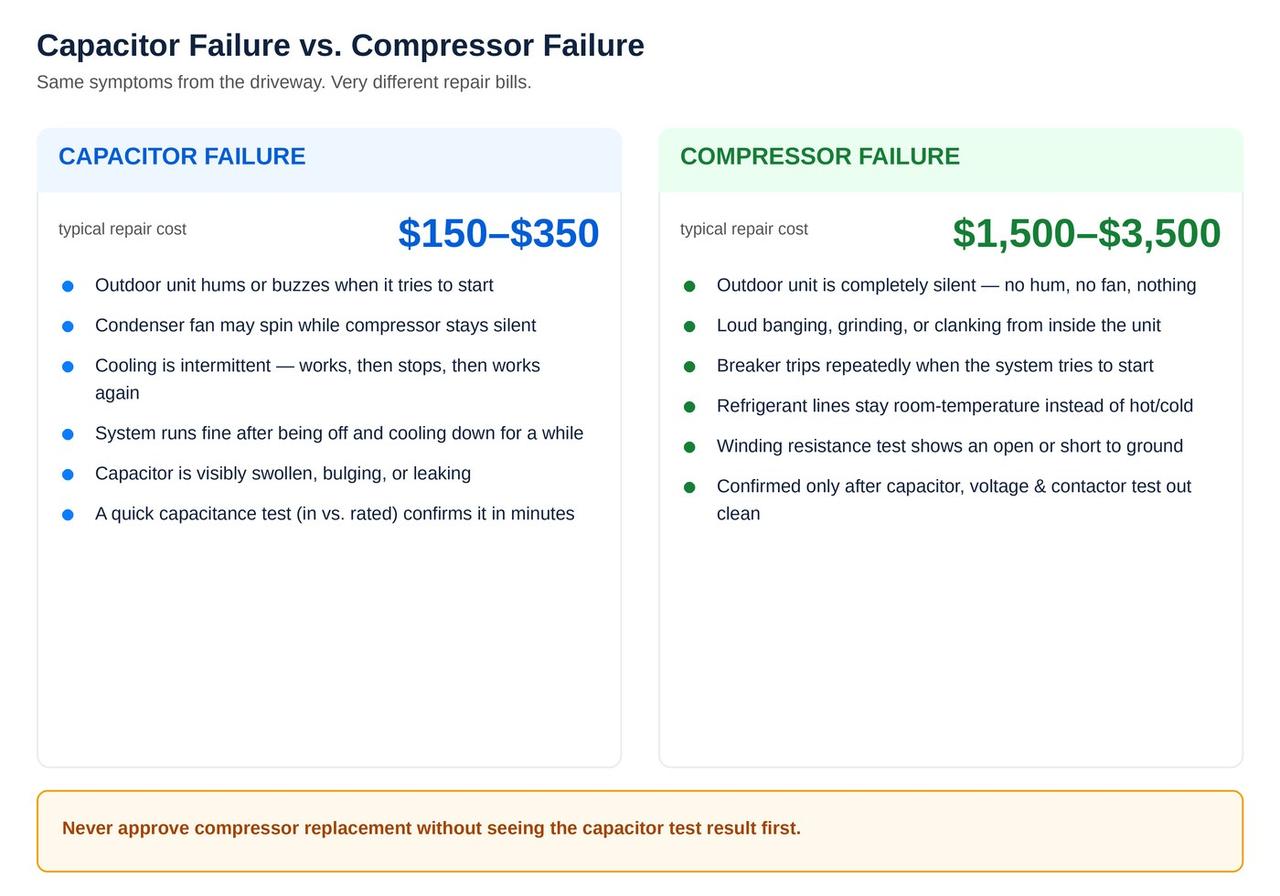
A humming outdoor unit can look like a major compressor failure—but sometimes the actual problem is a much smaller electrical component. That is why a compressor should never be condemned from sound, age, or one quick observation alone.
This article walks through a representative diagnostic example based on a common field pattern: the homeowner reports no cooling, the outdoor unit hums, and the compressor does not start. The purpose is to show how proper testing separates a failed capacitor from an actual compressor problem.
Licensed Texas HVAC contractor TACLB43277C.
What This Diagnostic Example Covers
The Homeowner Complaint
What the homeowner noticed
- The thermostat was set to COOL.
- The indoor blower was running.
- The outdoor unit made a humming sound.
- The house temperature kept rising.
- The homeowner feared the compressor had failed.
Why the symptoms were confusing
A failed capacitor, low voltage, damaged contactor, compressor overload, locked rotor, or internal compressor failure can all create overlapping symptoms. The sound alone does not identify the failed component.
What the Initial Symptoms Suggested
| Symptom | Possible cause | Why more testing is needed |
|---|---|---|
| Outdoor unit hums | Capacitor, contactor, compressor, fan motor | Several electrical and mechanical failures can hum. |
| Indoor fan runs | Cooling call is partially active | Indoor blower operation does not prove outdoor cooling is working. |
| Compressor does not start | Capacitor, voltage, overload, locked rotor, winding issue | The starting circuit must be tested before condemning the compressor. |
| House temperature rises | No active refrigeration cycle | The cause may still be electrical rather than mechanical. |
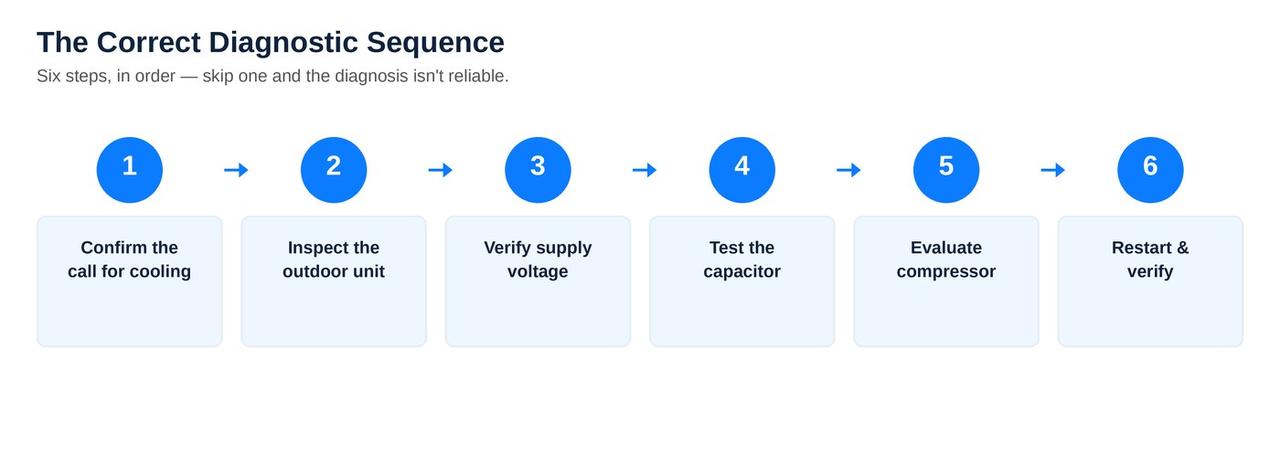
The Correct Diagnostic Sequence
Verify thermostat settings and that the low-voltage controls are requesting cooling.
Look for burned wiring, loose terminals, damaged contactor points, swollen capacitor, fan problems, and signs of overheating.
Confirm the equipment is receiving proper voltage before evaluating the compressor.
Compare measured capacitance with the rated value and inspect for physical damage.
Check winding resistance, shorts to ground, overload condition, and starting behavior.
After correcting the failed component, confirm compressor operation, fan operation, refrigerant performance, airflow, and temperature response.
Why a Weak Capacitor Can Look Like a Bad Compressor
The compressor needs the correct electrical support to start and run. A weak or failed capacitor can leave the compressor unable to start even though the compressor itself is still functional.
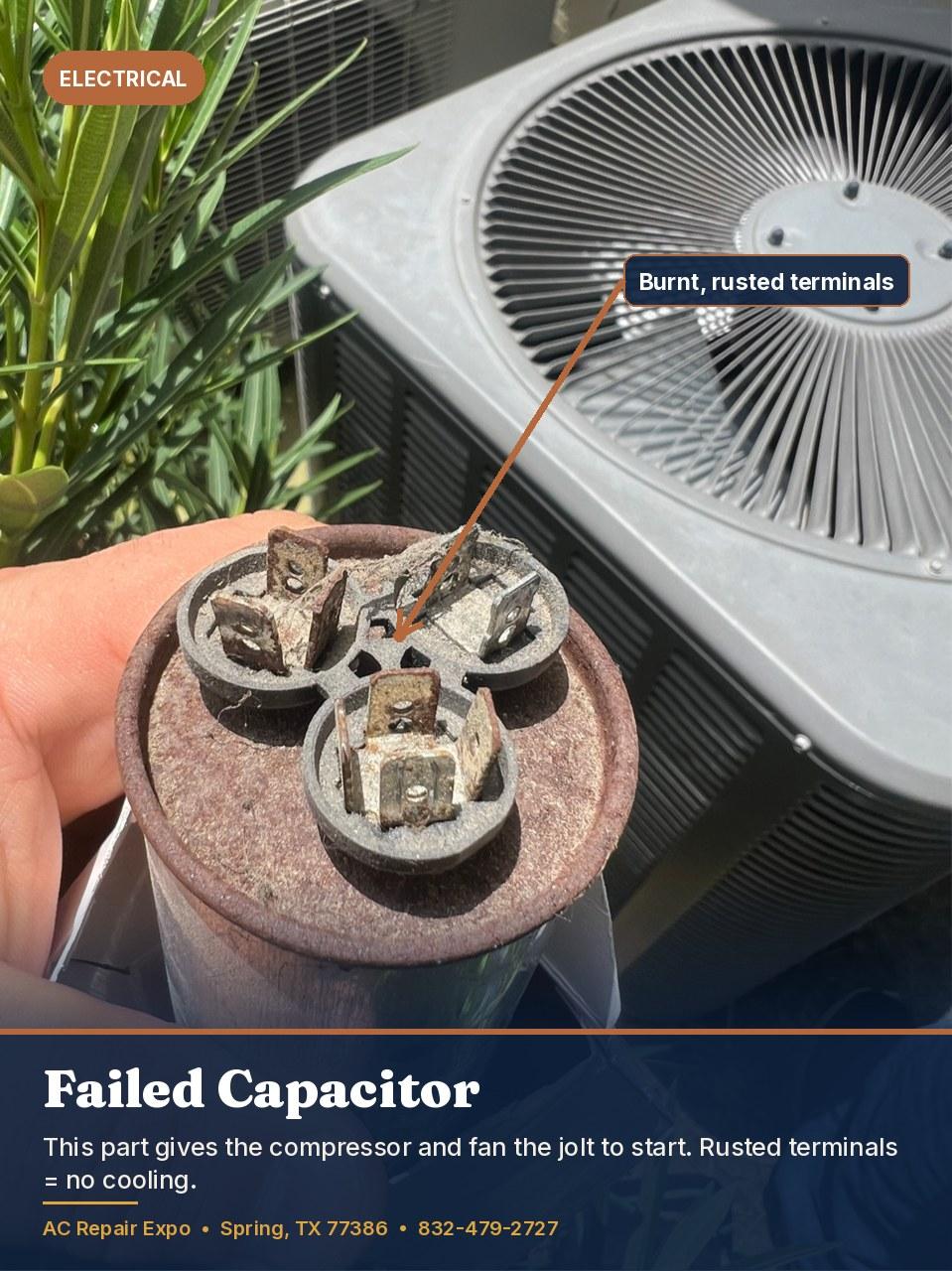
A failed capacitor pulled from a Spring, TX condenser — burnt and rusted terminals stopped it from sending the compressor the jolt it needs to start.
Common capacitor symptoms
- Humming or buzzing
- Delayed compressor start
- Intermittent cooling
- Outdoor fan runs but compressor does not
- System works after cooling down, then fails again
Why Texas heat matters
High ambient temperatures and long run times increase electrical stress. Capacitors are common summer failure points in North Houston, especially when the outdoor unit is dirty or ventilation is restricted.
How the Compressor Should Be Evaluated
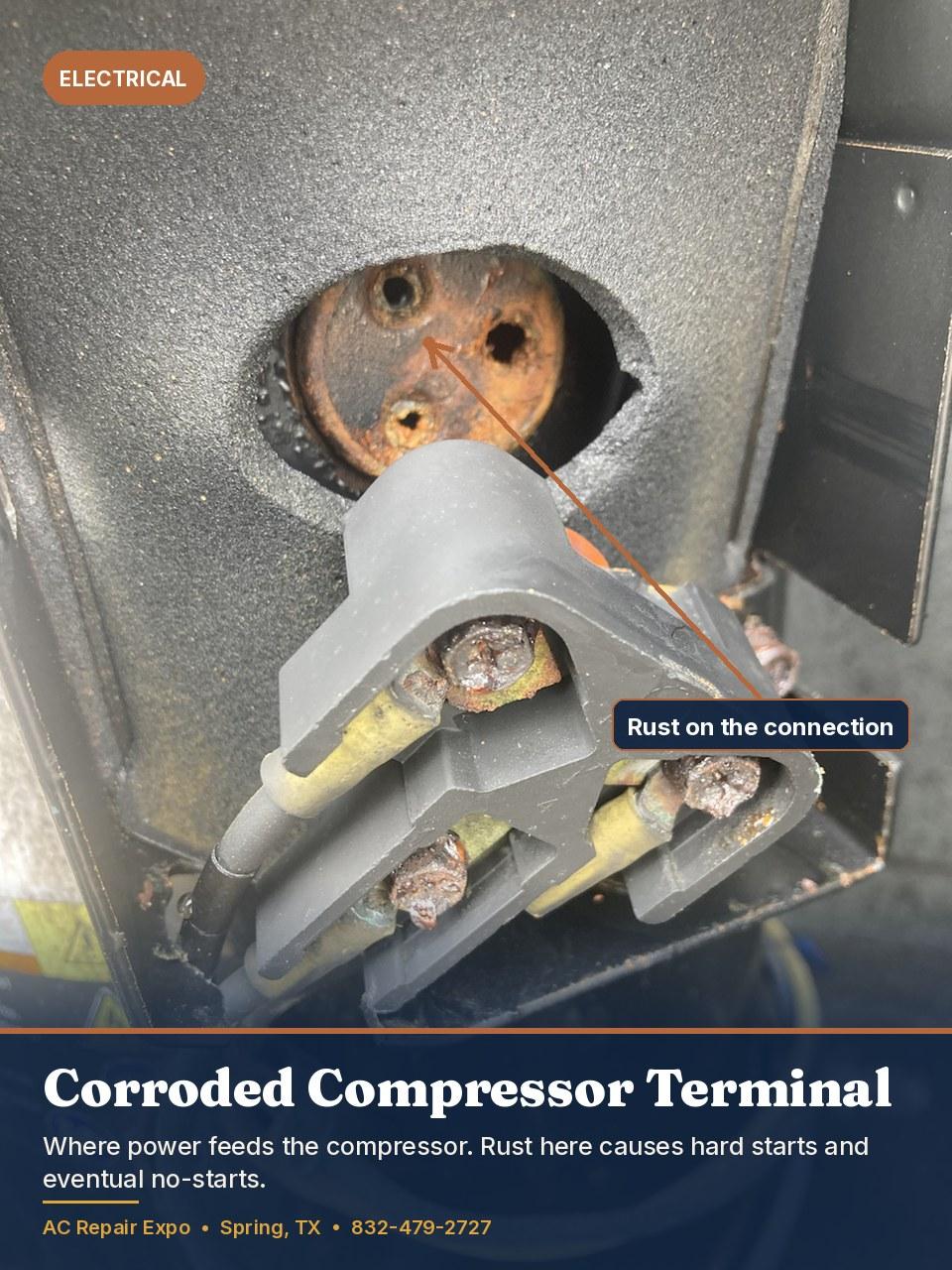
Rust on a compressor terminal connection — this is where power actually feeds the compressor, and corrosion here causes hard starts long before a full no-start.
A compressor diagnosis should be supported by testing—not a guess.
- Correct supply voltage
- Contactor condition and voltage drop
- Capacitor condition
- Winding resistance
- Short-to-ground testing
- Overload status
- Starting current and running current
- Operating pressures and temperatures after startup
Texas Technician Tip
A compressor that will not start is not automatically a failed compressor. The starting circuit, voltage, controls, and mechanical load must be evaluated first.
The Representative Repair Result
In this common diagnostic pattern, the capacitor tests outside its acceptable range while the compressor windings and insulation tests remain acceptable. After the correct capacitor is installed and the system is restarted, the compressor starts normally.
A complete verification should then include:
- Compressor and condenser-fan operation
- Running voltage and current
- Refrigerant performance
- Supply and return temperatures
- Indoor airflow
- Outdoor coil condition
- Thermostat response
Common Diagnostic Mistakes
Condemning the compressor from sound alone
Buzzing and humming can come from a capacitor, contactor, motor, low voltage, or compressor.
Replacing the capacitor without checking the system
A failed capacitor may be the result of overheating, dirty coils, high voltage, or another underlying problem.
Using a hard-start kit as a substitute for diagnosis
A hard-start device may help in selected applications, but it should not be used to hide a failing compressor or unresolved electrical problem.
Skipping airflow and refrigerant verification
Even after the compressor starts, the system still needs to be checked for complete cooling performance.
When to Get a Second Opinion
Consider a second opinion before approving a major compressor or replacement proposal when:
- No electrical measurements were shown or explained.
- The capacitor and contactor were not tested.
- The technician did not verify supply voltage.
- The compressor was condemned from sound alone.
- The system was not checked for warranty coverage.
- The repair-versus-replacement explanation was unclear.
Repair or Replace?
A capacitor failure alone usually does not justify replacing the system. The decision changes if the compressor is actually failed, the equipment is old, major components are out of warranty, refrigerant leaks are present, or the system has repeated problems.
Ask for:
- The exact failed component
- The supporting measurements
- Warranty status
- System age and refrigerant type
- Total repair scope
- Replacement options only if the repair economics justify them
Need a Second Opinion on an AC Compressor Diagnosis?
AC Repair Expo Heating & Cooling Inc provides professional AC diagnostics throughout Spring, The Woodlands, Tomball, Cypress, Conroe, Humble, Kingwood, and nearby North Houston communities.
Our licensed technicians evaluate capacitors, contactors, voltage, compressor windings, motor operation, refrigerant performance, airflow, coils, and overall system condition before recommending a major repair or replacement.
Texas HVAC License TACLB43277C- Capacitor and contactor testing
- Voltage and electrical checks
- Compressor winding evaluation
- Starting and running-current review
- Airflow and refrigerant verification
- Clear repair-versus-replacement options
Frequently Asked Questions
Can a bad capacitor make the compressor look failed?
Yes. A weak or failed capacitor can prevent the compressor from starting even when the compressor itself is still functional.
Can the outdoor fan run while the compressor is off?
Yes. The condenser fan and compressor are separate components.
Does humming mean the compressor is bad?
No. Humming can come from a capacitor, contactor, motor, low voltage, or compressor.
Can a capacitor be tested without replacing it?
Yes. A qualified technician can measure capacitance and compare it with the rated value.
Should I use a hard-start kit?
Only when appropriate for the equipment and after proper diagnosis. It should not be used to hide a failing compressor or electrical problem.
Can a bad contactor imitate compressor failure?
Yes. Burned contacts or voltage drop can prevent the compressor from receiving proper power.
What tests confirm a bad compressor?
Voltage, winding resistance, short-to-ground testing, overload status, starting current, running current, and system performance all help confirm the diagnosis.
Should a compressor be replaced without checking warranty?
No. Warranty status should be verified before approving a major repair.
Does a failed capacitor mean the whole system is old?
No. Capacitors can fail on both newer and older systems.
Can a dirty condenser coil contribute to capacitor failure?
It can increase operating stress and temperature, which may contribute to electrical component failure.
Should I replace the system after one capacitor failure?
Usually not. A single capacitor failure should be evaluated in the context of the system's age and overall condition.
When should I get a second opinion?
Get one when a major compressor or replacement recommendation is not supported by clear testing and measurements.