High Suction Pressure in an AC System
High suction pressure means the low-side refrigerant pressure is above the expected range for current operating conditions. Common causes include high indoor heat load, excessive airflow, overfeeding TXV, low superheat, refrigerant overcharge, compressor inefficiency, and incorrect test conditions.
Pressure alone is not enough. Indoor temperature, humidity, airflow, head pressure, superheat, subcooling, and compressor amperage all matter.
Texas HVAC License TACLB43277C.
What This Guide Covers
What Is Suction Pressure?
Suction pressure is measured on the low side of the refrigeration circuit, usually near the compressor suction service port. It reflects evaporator saturation temperature and changes with indoor load, airflow, refrigerant charge, metering-device operation, and compressor pumping ability.
Common Symptoms Associated With High Suction Pressure
Warm Supply Air
The evaporator may not be operating at a low enough temperature.
Poor Humidity Removal
A warmer coil may remove less moisture.
Long Run Times
The system may struggle to satisfy the thermostat.
Low Temperature Split
The return-to-supply difference may be smaller than expected.
Low Superheat
The evaporator may be overfed.
Floodback Risk
Liquid refrigerant may return toward the compressor.
10 Causes of High Suction Pressure
1. High Indoor Heat Load
Very hot indoor air, high humidity, cooking, open doors, or a recently started system can raise suction pressure.
2. Excessive Indoor Airflow
Too much airflow can warm the evaporator and increase suction pressure.
3. Overfeeding TXV
A TXV may feed too much refrigerant because of bulb, equalizer, or internal valve problems.
4. Low Superheat
Excess refrigerant leaving the evaporator can indicate flooding.
5. Refrigerant Overcharge
Too much refrigerant can elevate suction and head pressure in some systems.
6. Compressor Valve Leakage
Worn valves may reduce the compressor's ability to pull suction pressure down.
7. Weak Compressor
Internal wear can reduce pumping capacity and compression ratio.
8. Incorrect Blower Speed
Fan settings may be too high for the system and climate.
9. Wrong Metering Device
An oversized piston, incorrect TXV, or equipment mismatch can overfeed the evaporator.
10. Incorrect Test Conditions
Readings taken before stabilization or during extreme load can be misleading.
High Indoor Load and Elevated Suction Pressure
When a hot, humid home first starts cooling, the evaporator absorbs a large amount of sensible and latent heat. Suction pressure may remain high until indoor conditions improve.
- AC was off for several hours
- Indoor temperature is far above setpoint
- Doors or windows are open
- Humidity is unusually high
- There is heavy cooking or occupancy load
- Attic or duct heat gain is excessive
Overfeeding TXV and Low Superheat
An overfeeding TXV can raise suction pressure and lower superheat. Clues include a cold suction line, weak dehumidification, loose or uninsulated sensing bulb, incorrect bulb position, or equalizer problems.
Compressor Inefficiency and High Suction Pressure
A weak compressor may not create the expected pressure difference between the low and high sides.
- High suction pressure
- Lower-than-expected head pressure
- Low compression ratio
- Weak cooling
- Long run times
- Abnormal compressor amperage
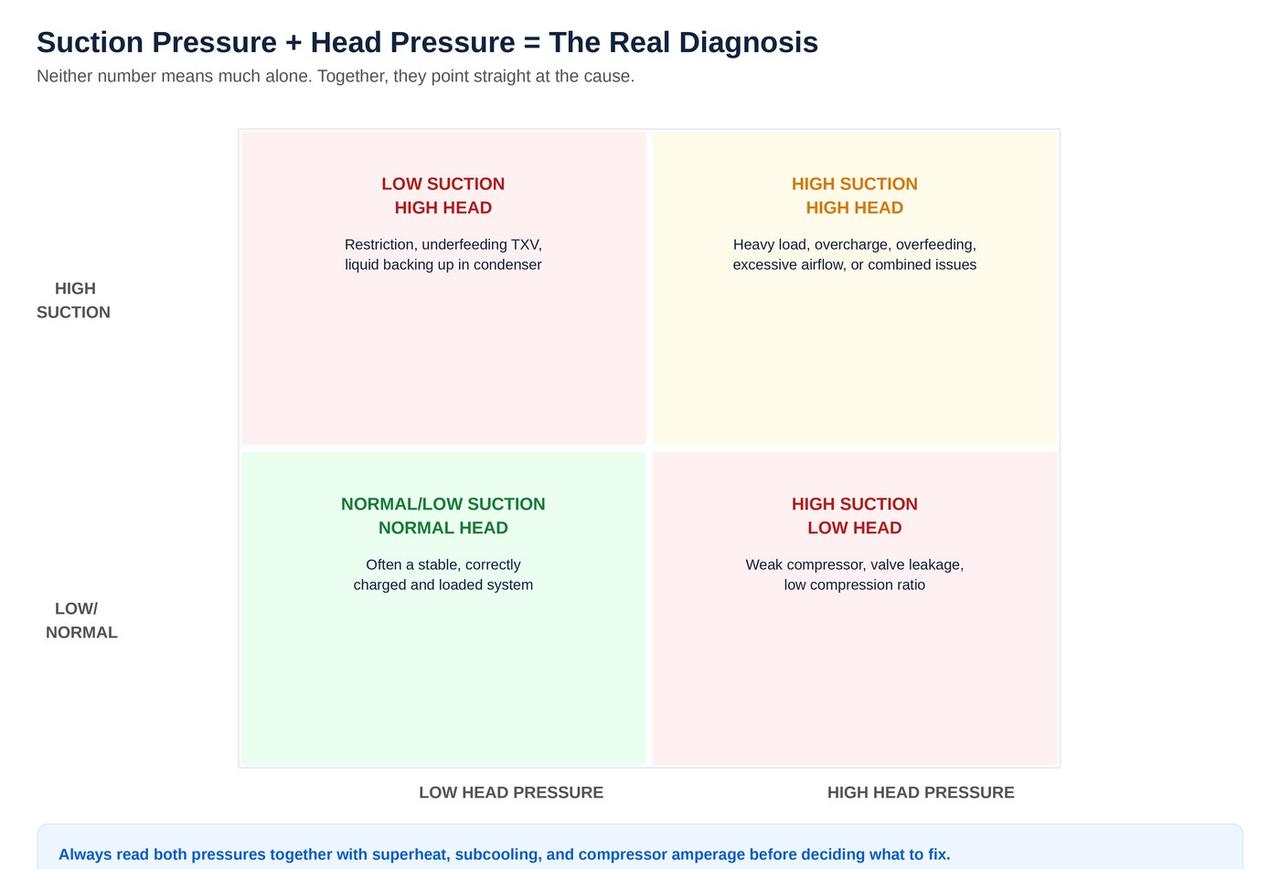
High Suction Pressure Diagnostic Comparisons
| Pressure pattern | Possible causes |
|---|---|
| High suction, high head | Heavy load, overcharge, overfeeding, excessive airflow, or multiple combined problems |
| High suction, low head | Weak compressor, valve leakage, low compression ratio |
| High suction, normal head | High indoor load, excessive airflow, mild overfeeding |
| Normal suction, high head | Dirty condenser, overcharge, non-condensables, poor condenser airflow |
| Low suction, high head | Restriction, underfeeding TXV, liquid backing up in the condenser |
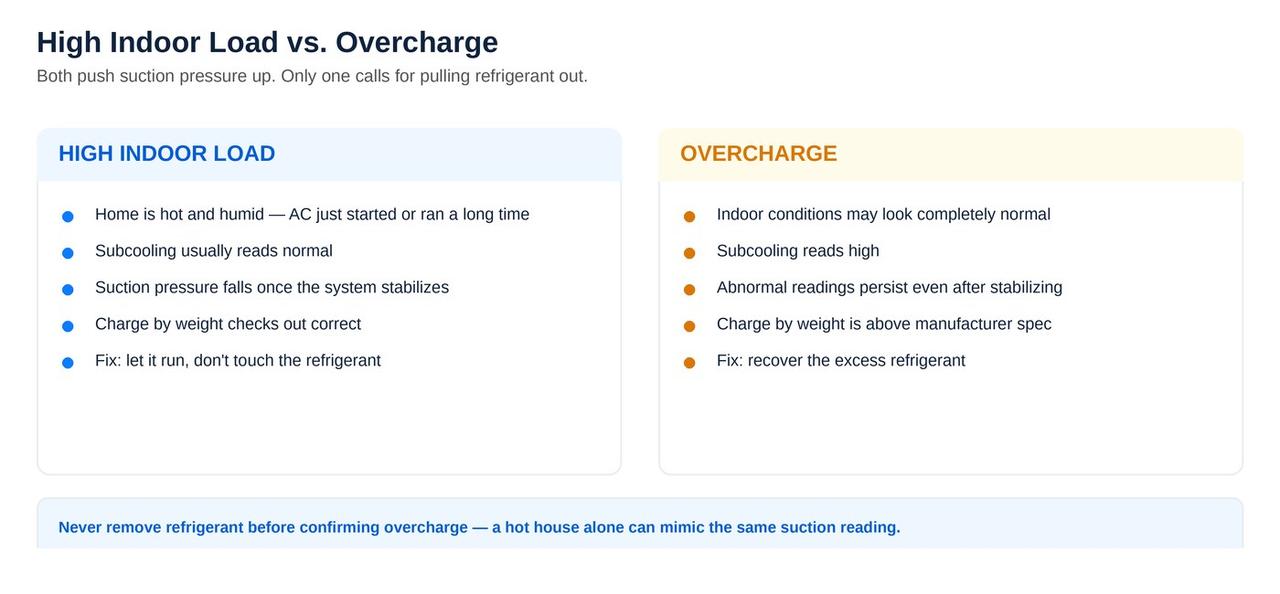
High Suction Pressure vs. Overcharge
| Clue | High indoor load | Overcharge |
|---|---|---|
| Indoor conditions | Hot and humid | May be normal |
| Subcooling | May be normal | Often high |
| After stabilization | Suction pressure falls | Abnormal readings remain |
| Charge by weight | May be correct | Above manufacturer requirement |
Excessive Airflow and High Suction Pressure
Excessive airflow can raise evaporator temperature while reducing dehumidification. Causes include blower speed set too high, an oversized air handler, incorrect airflow profiles, or mismatched equipment.
How a Technician Diagnoses High Suction Pressure
- Measure indoor temperature and humidity
- Verify run time and system stabilization
- Inspect filter, evaporator coil, and blower
- Measure total external static pressure
- Verify blower speed and airflow
- Measure suction and liquid pressures
- Convert pressures to saturation temperatures
- Calculate superheat and subcooling
- Measure return and supply temperatures
- Measure compressor amperage
- Evaluate compression ratio
- Inspect TXV bulb and equalizer line
- Compare readings with manufacturer data
Can High Suction Pressure Damage the Compressor?
High suction pressure is not always damaging by itself, but related conditions can be. Floodback may dilute oil, overfeeding may return liquid refrigerant, high load may raise amperage, and poor pumping may indicate internal wear.
How High Suction Pressure Is Corrected
- Allow the home and system to stabilize
- Correct excessive blower speed
- Repair TXV bulb or equalizer problems
- Replace an overfeeding metering device
- Recover excess refrigerant
- Correct equipment mismatch
- Address compressor valve or pumping failure
- Repair duct leakage or abnormal heat load
Repair or Replace?
High-load, airflow, charge, and TXV problems may be repairable. Replacement becomes more relevant when the compressor is mechanically inefficient, the equipment is badly mismatched, or several major components are failing.
High Suction Pressure in Spring or The Woodlands?
AC Repair Expo Heating & Cooling Inc provides refrigerant, airflow, TXV, and compressor diagnostics throughout Spring, The Woodlands, Tomball, Cypress, Conroe, Humble, Kingwood, and nearby North Houston.
- Airflow and static-pressure testing
- Superheat and subcooling checks
- TXV and bulb diagnosis
- Compressor pumping evaluation
- Charge verification
Frequently Asked Questions
What causes high suction pressure?
High indoor load, excessive airflow, overfeeding TXV, low superheat, overcharge, and weak compressor pumping are common causes.
Can high indoor temperature raise it?
Yes. A hot, humid home can temporarily raise suction pressure.
Can too much airflow cause it?
Yes. Excessive airflow can warm the evaporator and increase suction pressure.
Can an overfeeding TXV cause it?
Yes. Too much refrigerant flow can raise suction pressure and lower superheat.
Can overcharge cause it?
Yes, especially when head pressure and subcooling are also high.
Can a weak compressor cause it?
Yes. Worn valves may prevent the compressor from pulling suction pressure down.
What does high suction and low head mean?
It can indicate poor compressor pumping or internal valve leakage.
What does high suction and high head mean?
Possible causes include heavy load, overcharge, overfeeding, or combined airflow and refrigerant problems.
Can it cause poor humidity control?
Yes. A warmer evaporator may remove less moisture.
How is the cause confirmed?
Technicians evaluate load, airflow, pressures, saturation temperatures, superheat, subcooling, amperage, and compression ratio.
Should refrigerant be removed immediately?
No. Overcharge must be confirmed before removing refrigerant.
When should I call for service?
Call when cooling is weak, humidity remains high, or pressure readings suggest compressor or TXV problems.