Outdoor AC Unit Buzzing?
A steady buzz, loud electrical hum, rapid chatter, or repeated buzzing from the outdoor AC unit can point to several different problems. Some are minor vibration issues, while others involve a failed capacitor, damaged contactor, stalled fan motor, compressor startup problem, or loose high-voltage connection.
This guide explains what different buzzing sounds may mean, which symptoms require immediate shutdown, how technicians diagnose the source, and when repair or replacement may be appropriate.
Licensed Texas HVAC contractor TACLB43277C. Serving Spring, The Woodlands, Tomball, Cypress, Conroe, Humble, Kingwood, and nearby North Houston communities.
What This Guide Covers
Is Any Buzzing From an Outdoor AC Unit Normal?
A faint electrical hum may be present while an outdoor unit is operating. Compressors and contactor coils produce some electromagnetic sound, and panels may transmit normal vibration.
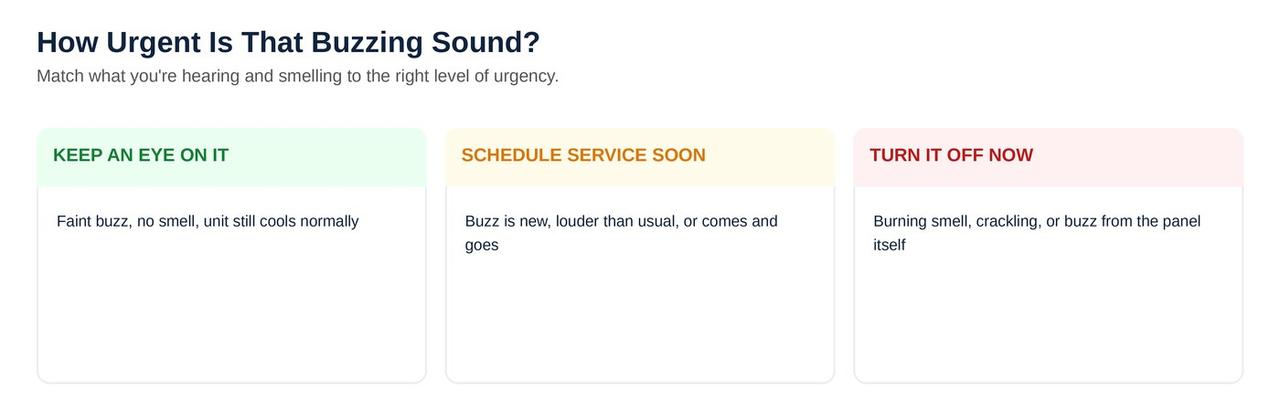
Buzzing becomes concerning when it is:
- New or noticeably louder than usual
- Present while the fan or compressor is not running
- Accompanied by clicking or rapid chattering
- Followed by a breaker trip
- Associated with burning odor or heat damage
- Severe enough to vibrate the cabinet or refrigerant lines
- Paired with weak cooling or no cooling
Texas Technician Tip
Electrical components and motors often reveal weakness during the hottest afternoon hours. A unit that only buzzes or struggles during peak heat may have a marginal capacitor, voltage drop, overheating motor, or hard-starting compressor.
Safe Checks Before Calling for Service
- Observe from a safe distance: Check whether the outdoor fan is spinning.
- Listen for compressor operation: A running compressor usually creates a deeper, steady mechanical sound below the fan noise.
- Check the thermostat: Confirm the system is calling for cooling.
- Check the breaker once: Do not continue resetting it if it trips again.
- Look for debris: Check for branches, plastic, or other material touching the guard or cabinet.
- Note the sound pattern: Continuous buzz, short buzz and click, rapid chatter, or vibration each suggest different causes.
10 Common Reasons an Outdoor AC Unit Buzzes
1. Contactor Coil Buzzing
The contactor sends high voltage to the compressor and fan. A slight hum can be normal, but loud buzzing may indicate coil wear, contamination, low control voltage, or damaged contacts.
- Buzzing begins when cooling is requested
- Outdoor unit starts intermittently
- Contactor chatters
- Contacts appear burned or pitted
2. Weak or Failed Capacitor
A weak capacitor can leave the compressor or fan motor energized but unable to start correctly, producing a loud hum or buzz.
- Unit buzzes but fan does not spin
- Compressor hums and clicks off
- System starts only after several attempts
- Problem is worse during heat
3. Compressor Failing to Start
A compressor that receives power but cannot start may create a deep buzz until the internal overload opens or the breaker trips.
- Deep humming from lower cabinet
- Lights dim during startup
- Buzzing ends with a click
- Breaker trips
4. Condenser Fan Motor Cannot Start
A seized, overheated, or electrically failed fan motor may buzz while the fan blade remains still or turns slowly.
- Fan is not spinning
- Motor shell is very hot
- Fan starts, then stops
- Grinding or squealing occurred first
5. Low-Voltage Chattering
A contactor that rapidly pulls in and drops out can create loud buzzing or machine-gun clicking. Causes include weak transformers, loose thermostat wires, control-board problems, and unstable control voltage.
6. Loose Electrical Connection
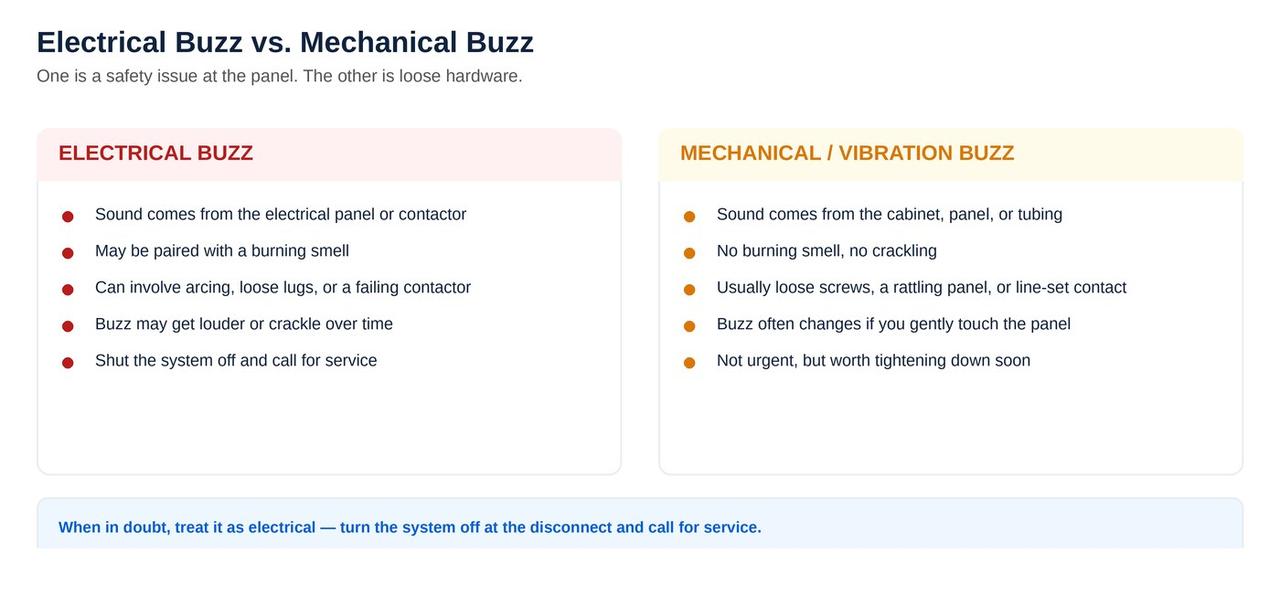
Loose terminals can arc, vibrate, overheat, and produce buzzing. This can damage wiring, contactors, disconnects, and compressor terminals.
7. Loose Cabinet Panel or Fan Guard
Normal compressor and fan vibration can make loose screws, panels, fan guards, or service covers buzz against the cabinet.
8. Refrigerant Line Vibration
Copper refrigerant lines may touch the cabinet, wall, framing, or each other and transmit compressor vibration as a buzzing sound.
9. Contaminated or Damaged Relay
Relays, fan controls, crankcase heater circuits, and control boards may buzz when coils or contacts wear out.
10. Utility or Voltage Problem
Low or unstable voltage can make coils and motors buzz, increase startup current, and prevent reliable operation.
Buzzing but the Outdoor Fan Is Not Spinning
This often points to a failed capacitor, seized fan motor, blocked fan blade, damaged wiring, or incorrect voltage to the motor.
Do not push the blade with a stick or reach through the fan guard. The fan can start unexpectedly.
Buzzing but the Compressor Is Not Running
If the fan runs but the compressor only hums or remains silent, the problem may involve the compressor side of the capacitor, compressor wiring, thermal overload, low voltage, locked rotor, or failed windings.
- Listen for a deep hum followed by a click.
- Note whether the breaker trips.
- Check whether the unit retries every few minutes.
- Turn cooling off if the compressor repeatedly attempts to start.
What Different Buzzing Sounds May Mean
| Sound or symptom | Possible causes | Best next step |
|---|---|---|
| Steady buzz while unit operates normally | Normal contactor hum or cabinet vibration | Monitor for changes in volume or performance. |
| Loud buzz but nothing starts | Failed capacitor, stalled motor, contactor problem, low voltage | Turn system off and schedule electrical testing. |
| Deep hum followed by a click | Compressor failed startup, overload, weak capacitor | Turn cooling off and test the startup circuit. |
| Rapid buzzing or chattering | Unstable low voltage, failing contactor coil, loose control wiring | Check the 24-volt control circuit. |
| Buzzing with burning smell | Loose terminal, arcing, overheated contactor, damaged wiring | Leave system off and arrange service. |
| Metallic buzz or vibration | Loose panel, fan guard, tubing, or hardware | Inspect after power is safely disconnected. |
| Buzzing followed by breaker trip | Locked motor, grounded compressor, shorted wiring | Do not reset repeatedly. |
How a Technician Diagnoses an Outdoor AC Buzzing Noise
- Locate the exact source of the sound
- Confirm thermostat and control signals
- Measure line voltage and control voltage
- Inspect breaker, disconnect, terminals, and wiring
- Test the dual-run capacitor
- Check contactor coil and contact voltage drop
- Measure fan-motor and compressor amperage
- Test compressor windings and insulation to ground
- Inspect panels, tubing, fan guard, and mounting hardware
- Check condenser airflow and coil condition
- Verify refrigerant pressures and complete system operation
Sound Is a Clue, Not a Final Diagnosis
Different failures can create similar sounds. Accurate diagnosis requires locating the source and verifying voltage, current, capacitance, wiring condition, motor operation, and compressor performance.
Can a Buzzing AC Unit Damage the Compressor?
Yes. A failed outdoor fan, weak capacitor, loose connection, low voltage, or repeated hard starting can overheat the compressor and increase winding stress.
- Repeated failed starts create heat.
- Loose terminals can burn compressor connections.
- A stopped fan raises pressure and temperature.
- Low voltage can increase current draw.
- Contactor chattering repeatedly interrupts power.
Does a Buzzing Outdoor Unit Mean You Need a New AC?
Usually not. Many buzzing problems involve replaceable parts or correctable vibration issues, including capacitors, contactors, wiring, fan motors, relays, panels, and tubing.
Replacement becomes more relevant if the compressor is grounded or mechanically failed, the system has multiple major problems, or repair cost is high compared with the equipment's age and remaining value.
Outdoor AC Unit Buzzing in Spring or The Woodlands?
AC Repair Expo Heating & Cooling Inc provides electrical and no-cooling diagnostics throughout Spring, The Woodlands, Tomball, Cypress, Conroe, Humble, Kingwood, and nearby North Houston communities.
Our licensed technicians test capacitors, contactors, fan motors, compressor startup, breakers, disconnects, wiring, control voltage, refrigerant performance, and complete system operation before recommending repair or replacement.
Texas HVAC License TACLB43277C- Capacitor and contactor testing
- Fan-motor and compressor checks
- Breaker and voltage diagnosis
- Wiring and terminal inspection
- Vibration and noise-source testing
- Clear repair-versus-replacement options
Frequently Asked Questions
Why is my outside AC unit making a buzzing noise?
Common causes include a contactor coil, weak capacitor, stalled fan motor, compressor startup problem, loose electrical connection, or vibrating panel.
Is a buzzing outdoor AC unit dangerous?
It can be. Buzzing with burning odor, smoke, tripped breakers, melted wiring, or failed startup should be treated as an electrical warning.
Why does my AC buzz but not turn on?
A failed capacitor, contactor problem, low voltage, stalled motor, locked compressor, or control-circuit fault may prevent startup.
Can a bad capacitor make the outside unit buzz?
Yes. A weak capacitor can leave the fan motor or compressor energized but unable to start correctly.
Why is the contactor buzzing?
The coil may be vibrating because of normal operation, low control voltage, contamination, coil wear, or unstable wiring.
Why does the buzzing stop after a click?
The compressor or motor may have failed to start and opened its internal thermal overload.
Why does my AC buzz and trip the breaker?
This may indicate a locked motor, grounded compressor, shorted wire, damaged contactor, or severe startup-current problem.
Should I turn off my AC if it is buzzing?
Turn it off if the unit does not start, the fan is not spinning, the breaker trips, or you smell burning.
Can low voltage make an AC unit buzz?
Yes. Low or unstable voltage can make contactors chatter and motors struggle to start.
Does buzzing mean the compressor is bad?
Not necessarily. Capacitors, contactors, wiring, fan motors, relays, and loose panels can create similar sounds.
Can a loose panel make a loud buzzing noise?
Yes. Cabinet panels, fan guards, and tubing can amplify normal compressor and fan vibration.
When should I call an HVAC technician?
Call when buzzing is new, loud, accompanied by no cooling, failed startup, breaker trips, burning odor, or intermittent operation.