
AC Compressor Noise Guide: Buzzing, Humming, Rattling, Knocking & Grinding
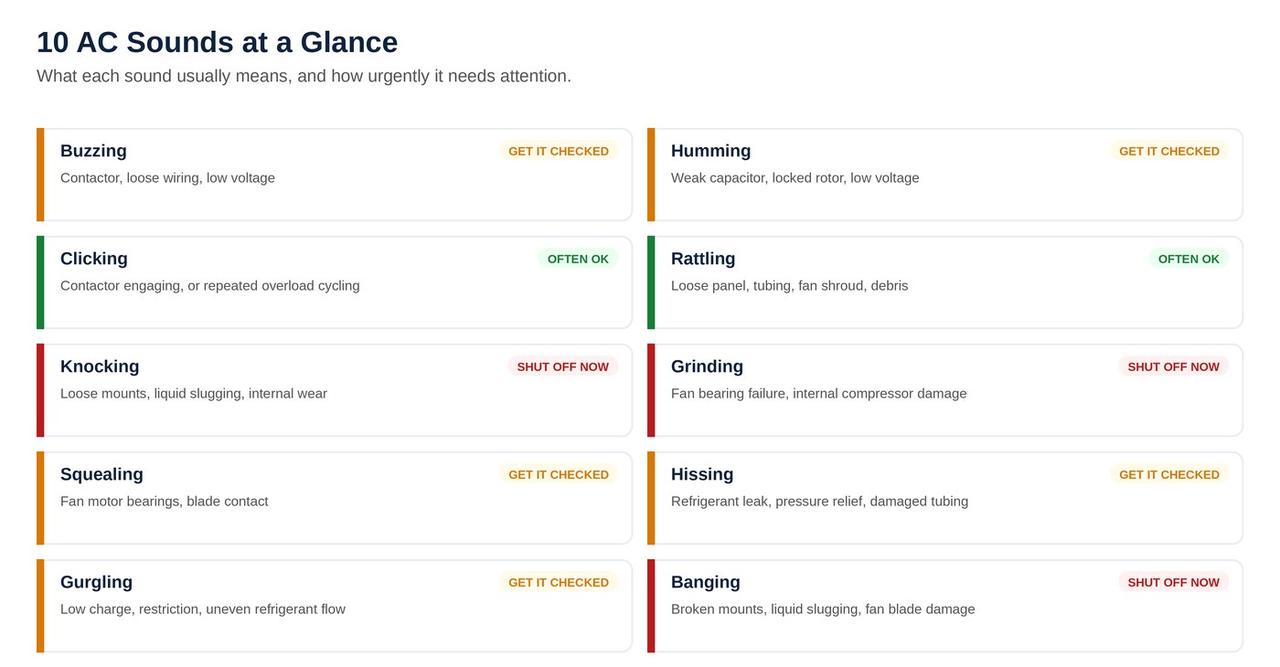
Different AC compressor noises point to different electrical, refrigerant, airflow, vibration, or mechanical problems. Buzzing may come from a contactor or loose connection. Humming may indicate a weak capacitor or locked rotor. Knocking and grinding may suggest serious internal damage.
The first step is identifying whether the sound comes from the compressor, condenser fan, contactor, refrigerant lines, cabinet panels, or another outdoor-unit component.
Texas HVAC License TACLB43277C.
Noise Guide
Is the Noise Really Coming From the Compressor?
The outdoor unit contains several components that can make similar sounds:
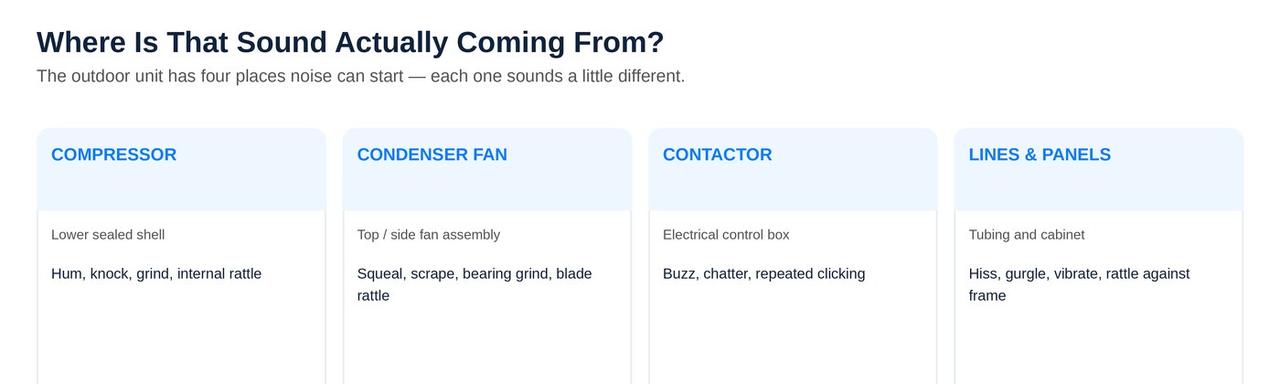
Compressor
May hum, buzz, knock, grind, or click off on overload.
Condenser Fan
May squeal, scrape, rattle, hum, or vibrate.
Contactor
May buzz, chatter, or click repeatedly.
Capacitor
Usually does not make a loud sound itself, but failure may cause compressor humming.
Refrigerant Lines
May hiss, gurgle, vibrate, or knock against framing.
Cabinet Panels
Loose screws and panels may create rattling or buzzing.
Why Is the AC Compressor Buzzing?
Buzzing is often electrical or vibration-related.
- Pitted or chattering contactor
- Loose wire connection
- Low control voltage
- Weak capacitor causing startup difficulty
- Compressor energized but not rotating
- Loose cabinet panel or refrigerant line
- Electrical arcing
Why Is the Compressor Humming?
A steady hum may mean the compressor is energized but cannot start properly.
- Weak or failed run capacitor
- Locked rotor
- Low voltage
- High pressure at startup
- Loose or burned terminal connection
- Internal mechanical failure
Humming Plus Clicking
A hum followed by a click often means the compressor opens its thermal overload after a failed start.
Why Does the Outdoor Unit Keep Clicking?
Some clicking is normal when the contactor engages and releases. Repeated clicking is not.
- Contactor chatter
- Thermostat signal dropping in and out
- Condensate float switch opening
- Pressure switch cycling
- Compressor thermal overload opening and resetting
- Loose low-voltage wiring
Why Is the Outdoor AC Rattling?
Rattling is often external and may be repairable without compressor replacement.
- Loose access panel
- Loose fan shroud or grille
- Refrigerant tubing touching the cabinet
- Debris inside the condenser
- Loose compressor mounting hardware
- Worn rubber isolation grommets
- Fan blade damage
Why Is the Compressor Knocking?
Knocking can be external vibration or internal mechanical damage.
- Loose compressor mounts
- Refrigerant line striking the cabinet
- Internal valve or bearing wear
- Liquid refrigerant entering the compressor
- Broken internal suspension components
- Severe startup movement
What Does Grinding Mean?
Grinding usually indicates mechanical contact or severe bearing damage.
- Condenser fan motor bearing failure
- Fan blade scraping the shroud
- Compressor internal bearing damage
- Severe lack of lubrication
- Internal compressor wear
Because fan and compressor grinding can sound similar, the technician must isolate the source safely.
Squealing or Screeching Sounds
High-pitched sounds often come from rotating components or high-pressure refrigerant movement.
- Condenser fan motor bearings
- Fan blade contacting metal
- High-pressure relief or refrigerant flow
- Loose or damaged motor components
- Severe internal compressor friction
Hissing Sounds Near the Outdoor Unit
A brief hiss during pressure equalization may be normal. Continuous or loud hissing may indicate:
- Refrigerant leak
- Pressure relief event
- TXV or restriction-related refrigerant flow
- Loose service-port cap or valve core
- Damaged tubing
Gurgling or Bubbling Sounds
Some refrigerant movement sounds are normal during startup and shutdown. Persistent gurgling may point to:
- Low refrigerant charge
- Refrigerant restriction
- Uneven refrigerant flow
- Oil and refrigerant movement
- Condensate drainage noise mistaken for compressor noise
Banging or Violent Shaking
Banging is one of the most urgent sounds.
- Loose compressor mounting hardware
- Broken internal compressor mounts
- Liquid slugging
- Severe fan blade damage
- Refrigerant line striking the cabinet
- Compressor startup torque combined with failed isolation mounts
Normal vs. Abnormal AC Sounds
| Sound | May be normal | Usually abnormal |
|---|---|---|
| Single click | Contactor engaging | Repeated chatter or rapid clicking |
| Brief hum | Normal motor startup | Long hum without startup |
| Brief hiss | Pressure equalization | Continuous loud hissing |
| Light vibration | Normal compressor operation | Violent shaking or tubing impact |
| Soft refrigerant movement | Possible during startup or shutdown | Persistent gurgling with weak cooling |
Buzzing vs. Humming
| Clue | Buzzing | Humming |
|---|---|---|
| Common source | Contactor, loose electrical connection, cabinet vibration | Motor or compressor energized but struggling |
| Startup behavior | May occur before or during operation | Often occurs during failed startup |
| Related test | Voltage drop, contactor, wiring inspection | Capacitor, startup amps, locked-rotor test |
Rattling vs. Knocking
| Clue | Rattling | Knocking |
|---|---|---|
| Likely source | Loose panel, tubing, debris, fan shroud | Mounting problem or internal mechanical impact |
| Severity | Often minor but should be corrected | Potentially serious |
| Changes when panel is secured | Often improves | May continue from compressor shell |
Compressor Noise vs. Fan Motor Noise
| Clue | Compressor | Condenser fan |
|---|---|---|
| Sound location | Lower sealed shell area | Top or side fan assembly |
| When fan stops | Noise may continue briefly if compressor runs | Noise stops with fan |
| Common sounds | Hum, knock, grind, internal rattle | Squeal, scrape, bearing grind, blade rattle |
| Electrical pattern | Compressor amp and pressure changes | Fan motor amp, capacitor, and RPM changes |
When Should You Turn the AC Off?
- Grinding or heavy knocking
- Repeated humming followed by clicking
- Burning electrical odor
- Smoke or visible arcing
- Breaker repeatedly trips
- Outdoor unit shakes violently
- Fan is not spinning while compressor runs
- Loud hissing with rapid cooling loss
How a Technician Diagnoses Compressor Noise
- Identify the exact sound location
- Observe startup and shutdown
- Inspect cabinet panels, tubing, and mounts
- Inspect fan blade and motor bearings
- Test the capacitor and contactor
- Measure supply voltage and voltage drop
- Measure startup and running amperage
- Check compressor shell temperature
- Measure suction and head pressures
- Calculate superheat and subcooling
- Check for floodback, restriction, or overcharge
- Test winding resistance and insulation to ground when needed
Record the Sound
A short video showing when the sound begins can help when the noise is intermittent.
How Compressor Noise Is Repaired
- Tighten panels and mounting hardware
- Isolate vibrating refrigerant lines
- Remove debris
- Repair or replace the condenser fan motor
- Replace a weak capacitor
- Replace a pitted contactor
- Repair loose or burned wiring
- Correct refrigerant charge or restrictions
- Correct floodback or slugging causes
- Replace the compressor when internal damage is confirmed
Repair or Replace?
External rattles, contactor buzzing, capacitor-related humming, fan noise, and tubing vibration may be repairable.
Replacement becomes more likely when there is confirmed internal grinding, heavy knocking, grounded windings, locked rotor, failed pumping, or repeated mechanical noise after external causes are corrected.
Loud AC Compressor in Spring or The Woodlands?
AC Repair Expo Heating & Cooling Inc provides compressor, fan, electrical, refrigerant, and vibration diagnostics throughout Spring, The Woodlands, Tomball, Cypress, Conroe, Humble, Kingwood, and nearby North Houston.
- Compressor and fan noise isolation
- Capacitor and contactor testing
- Voltage and amp-draw checks
- Pressure and refrigerant diagnosis
- Vibration and mounting inspection
- Repair-versus-replacement options
Frequently Asked Questions
Why is my AC compressor buzzing?
Possible causes include contactor vibration, loose wiring, low voltage, a weak capacitor, or an energized compressor that cannot start.
Why is my compressor humming but not starting?
A weak capacitor, locked rotor, low voltage, high pressure, or internal mechanical failure may prevent startup.
Is compressor clicking normal?
One click at startup or shutdown can be normal. Repeated clicking or chatter is not.
What causes rattling in the outdoor unit?
Loose panels, tubing, fan components, debris, or compressor mounts commonly cause rattling.
What does compressor knocking mean?
It may indicate loose mounts, liquid slugging, internal wear, or broken internal suspension components.
What does grinding mean?
Grinding may indicate fan bearing failure, blade contact, or severe internal compressor damage.
Is hissing always a refrigerant leak?
No. Brief pressure equalization can be normal, but continuous loud hissing should be inspected.
Can a bad capacitor make the compressor noisy?
Yes. A weak capacitor can cause humming, hard starting, clicking, and overheating.
Can low refrigerant cause unusual noise?
Yes. Low charge can cause gurgling, hissing, overheating, and unstable refrigerant flow.
Should I turn the AC off if it is making noise?
Turn it off for grinding, banging, burning odors, smoke, breaker trips, or repeated failed-start sounds.
Does loud noise mean the compressor must be replaced?
Not always. Fan motors, panels, contactors, capacitors, and tubing can create similar sounds.
When should I call an HVAC technician?
Call when the sound is new, loud, repeated, connected to weak cooling, or accompanied by electrical or pressure symptoms.